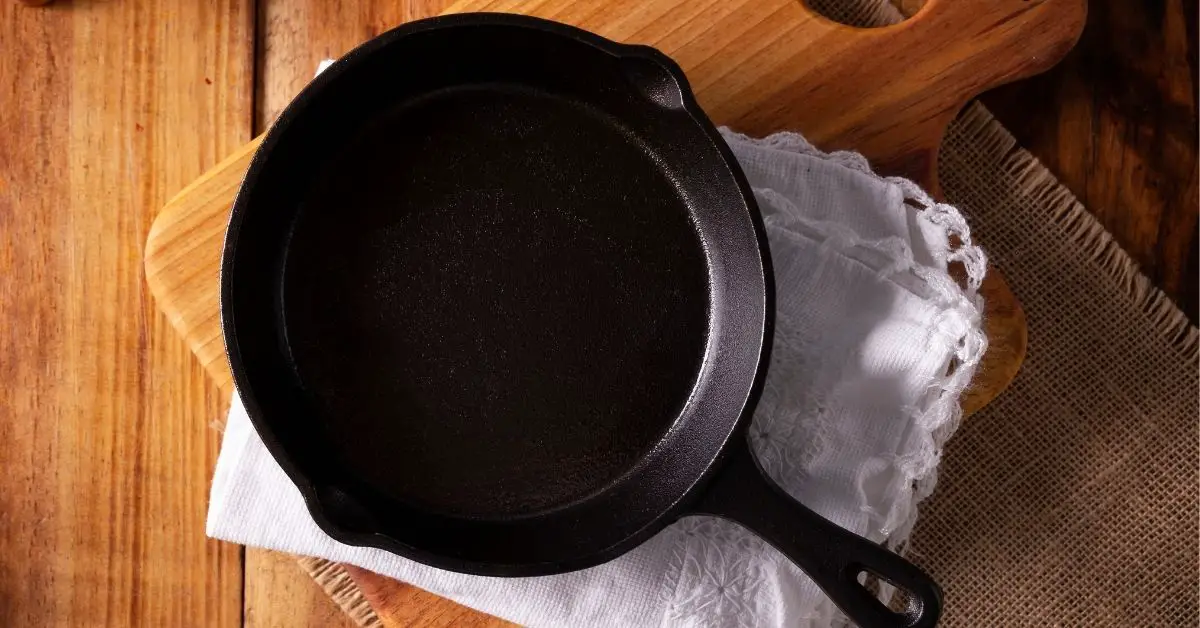
Lodge Pre Seasoned Cast Iron
A lot of people buy a new skillet and assume it is ready to cook like an old black pan that has been used for years. Then they see the label stuck to it, or food stuck to it, and that’s when the confusion starts. If it says pre-seasoned, it is only natural to wonder what that really means.
That is the question behind Lodge Pre Seasoned Cast Iron. For many beginners, the question is: if the skillet is already seasoned from the factory, why does anything still stick to it? The short answer is that factory pre-seasoning is real, but it is not the same thing as a skillet that has been cooked in, used, and built up over time.
What most people need is not a complicated explanation. They just need to know what is normal, what is not, and what to expect from a brand-new cast-iron
Quick Answer
Lodge Pre Seasoned Cast Iron is seasoned from the factory, but not fully seasoned in the way most people think of it. It usually starts with only a couple of thin baked-on coats of oil, so it is normal for labels, eggs, or certain foods to stick at first. That does not mean anything is wrong with the skillet.
It means the seasoning is just a beginning layer and needs time, cooking, and regular use to build into the darker, smoother surface people expect. In my opinion, pre-seasoned cast iron is a starting point, not the finished result.
Table of Contents
Why This Confuses So Many People
The word “pre-seasoned” makes it sound more finished than it really is. That is where the misunderstanding usually begins. A person hears “pre-seasoned” and pictures an old, faithful skillet that has been cooked in for years, dark as night, slick as can be, and ready for anything. Then they open the box, peel off a stuck-on label, and start wondering if they were misled.
I understand that question because it makes perfect sense. If something is seasoned, people expect that nothing should stick to it at all. Not the label. Not the first egg. Not the first piece of meat.
But that expectation is based on how people think about a mature cast iron surface, not a brand-new skillet from the store. That is a big difference.
What Pre-Seasoned Actually Means
When Lodge says a skillet is pre-seasoned, what they mean is the pan has already had oil applied and baked onto the iron at the factory.
That part is real. It is not bare iron. It is not unfinished. But it is also not what I would call fully seasoned in the way an experienced cast iron cook thinks about it.
Factory pre-seasoning is basically a couple of thin coats of oil that have been baked onto the skillet. That gives you a starting layer. It protects the pan from rusting and gets you started. But it is still thin. And thin seasoning is not the same as deep, well-established seasoning.
The Difference Between Factory Seasoning and Built-Up Seasoning
This is where a lot of people miss it. A skillet that has been used often, cleaned properly, dried, lightly oiled, and heated again and again by cooking in it starts building layer after layer over time.
This repeated use matters more than any technique. Hot oil, cooling down, cooking again, and doing it over and over is what gradually builds the darker patina people love.
That is why an older skillet that gets used daily usually performs better than a brand new one, even if both are technically seasoned. One is just getting started. The other has a visible history on it.
Lodge Pre Seasoned Cast Iron Is a Starting Point, Not a Finished Surface
That is really the heart of the whole topic. A brand new Lodge skillet is not supposed to act like your grandma’s 40-year-old frying pan on day one. It is pre-seasoned enough to start using, but it is not at the finish line yet. It is just the beginning.
I have seen this happen when somebody buys a new pan and cooks eggs in it right away, expecting a perfect nonstick surface. Then, when the eggs stick a little, maybe tear up, and now they think something is wrong with the skillet. Most of the time, nothing is wrong. The pan just needs more use and a little patience. If you’re new to this, some basic cast iron know-how helps too.
That is why I say pre-seasoned is real, but it is still incomplete compared to what most people have in mind.
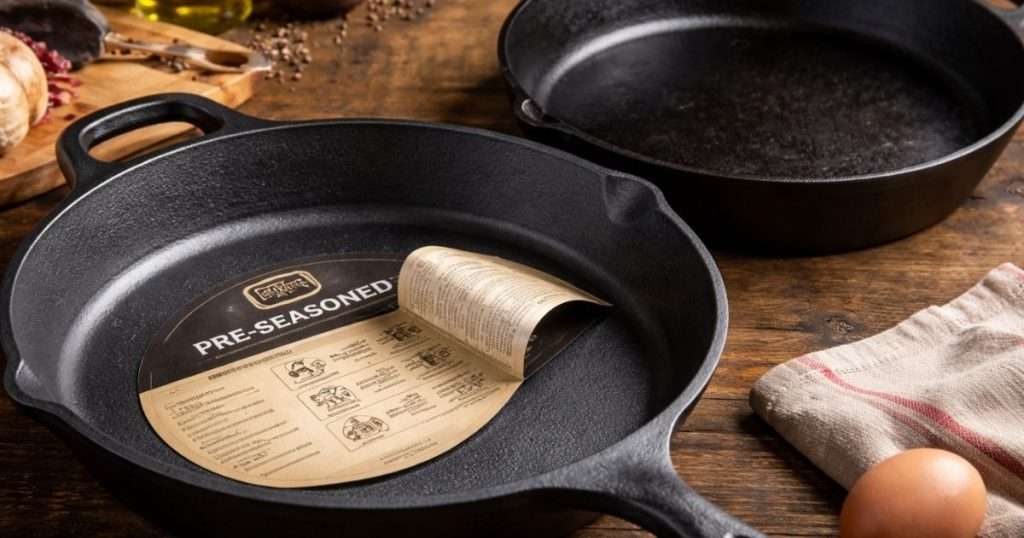
Why the Label Sticks to a Pre-Seasoned Skillet
This was the original question, and honestly, it is a good one. “If the skillet is seasoned, why does the label stick?”
The answer is simple. Because those beginning layers are so thin. The surface is not yet built up the way a heavily used
So yes, the label can stick. And yes, some foods can stick too. But that does not mean that the skillet is bare and unprotected.
Why this surprises first-time cast iron owners
A lot of first-time cast iron owners hear seasoned and automatically think nonstick. That is understandable, but cast iron does not work like a synthetic nonstick pan. It is a different thing entirely.
Seasoning is a baked-on layer of oil that develops over time. When it is thin, it is less forgiving. When it is built up through regular use, it usually performs better.
So the mistake is not buying the skillet. The mistake is expecting maturity from a brand new pan.
What Seasoning Actually Is
A lot of confusion clears up once you understand what seasoning really is.
Seasoning is not just oil sitting on the surface. It is oil that has been heated and baked into the iron. Over time, those layers build. That is why repeated use matters so much. Cook, clean, dry, heat, and do it again. That rhythm is what helps turn a new skillet into a dependable one.
In the video, I talked about a well-used 12-inch Lodge skillet that had been cooked in often, even daily. That is the picture people need in their minds. A pan like that did not get there in one or two oven sessions. It got there through time and use.
That is why chasing the perfect black patina too early often leads to frustration.
What to Expect When You First Use a New Skillet
This is where a lot of frustration can be avoided. With a brand new pre-seasoned skillet, expect the first few cooks to be more of a learning period than a perfect cast iron experience.
Some sticking can happen. Some uneven coloring can happen. The pan may look a little dry in one spot and darker in another. That is normal.
What is not normal is panicking every time the surface does not look perfect. Cast iron is one of those things that gets better as you use it. A new skillet often needs a little grace before it starts showing you what it can really do.
Foods That May Stick First
Eggs are a big one. People love to use eggs as the test, but eggs are not always the best first test for a brand new skillet. They can humble a new pan in a hurry. That does not mean the pan is bad. It just means the surface is still developing and your heat and fat need to be right too.
Sticky foods early on do not automatically mean you need to strip the pan, sand it, or start over. Most of the time, you just need more use.
Common Mistakes People Make With New Pre-Seasoned Cast Iron
One common mistake is expecting a perfect nonstick surface immediately.
Another is assuming that if food sticks once, the seasoning has failed. That is usually not the case. A thin factory seasoning layer is still very different from a skillet that has been built up through months or years of cooking.
Another mistake is trying to rush what takes time. People want that dark, slick look right away, so they start overthinking it, overseasoning it, or treating every little imperfection like a disaster. That usually creates more confusion than progress.
What I recommend instead
What I recommend instead is simple: use the skillet. Cook in it, clean it properly, dry it well, and apply a very light coat of oil if needed. Then keep cooking. Let the seasoning develop naturally through use instead of obsessing over whether the skillet looks perfect after the first couple of meals.
Do You Need to Season It Again Right Away?
Not necessarily. A new pre-seasoned skillet usually does not need to be stripped down and completely reworked just because it is not perfect out of the box. It already has a base layer. That is the whole point of pre-seasoning. You can begin cooking with it.
Now, could you add another light coat if you want to? Sure. Some people like doing that for peace of mind. But the bigger message is this: seasoning is not mainly about running it through the oven again and again trying to force a finished surface overnight.
Real seasoning takes time. That is the part people need to hear.
How a Great Cast Iron Surface Really Gets Built
This is where the confidence comes in. The best cast iron seasoning usually comes from regular use, not from chasing perfection. Every time you cook in the pan and take care of it properly, you are building something.
Slowly, the skillet starts improving. Slowly, it starts looking darker. Slowly, it starts acting more dependable.
That is why I would not judge a pre-seasoned skillet too quickly. A lot of what people want from cast iron only comes with repetition. You earn that surface through cooking.
Pattern recognition that helps beginners
- If the skillet is brand new and things stick a bit, that is normal.
- If the seasoning looks thin at first, that is normal.
- If the pan gets better with use, that is normal.
Those patterns should calm people down, because that is how cast iron often behaves in real life.
What usually helps most is understanding that new cast iron can stick at first simply because it has not matured yet.
My Honest Take on Lodge Pre Seasoned Cast Iron
My honest take is simple. Yes, it is seasoned. No, it is not fully seasoned in the sense most people are hoping for.
And that is exactly why I think this question matters. The label sticking is not really about the label. It is about the expectation behind it. People want to know whether pre-seasoned means finished. In my opinion, it does not. It means started.
That is not a knock on Lodge. That is just the truth about how cast iron works.
Once people understand that, they stop being disappointed by what is normal and start letting the skillet become what it can be.
Helpful Cast Iron Guides You May Want to Read Next
- Lodge 250th Anniversary Cast Iron Skillet: Why This One Hit Home for Me
 Lodge 250th Anniversary Cast Iron Skillet Sometimes a skillet shows up that feels like more than cookware. That is how I felt when I opened the box on the Lodge 250th Anniversary Cast Iron Skillet. Yes, it is cast iron. Yes, it is from Lodge. But this one carries a little more weight than just… Read more: Lodge 250th Anniversary Cast Iron Skillet: Why This One Hit Home for Me
 - Can Cast Iron Go In Dishwashers? Here’s What Really HappensCan Cast Iron Go In Dishwashers A lot of people ask this because cast iron feels tough. It is heavy, durable, and made to last for generations. So it is easy to assume a cast iron skillet should be able to handle a dishwasher just like any other pan in the kitchen. That is where… Read more: Can Cast Iron Go In Dishwashers? Here’s What Really Happens
- Lodge Pre Seasoned Cast Iron: Why It Still SticksLodge Pre Seasoned Cast Iron A lot of people buy a new skillet and assume it is ready to cook like an old black pan that has been used for years. Then they see the label stuck to it, or food stuck to it, and that’s when the confusion starts. If it says pre-seasoned, it… Read more: Lodge Pre Seasoned Cast Iron: Why It Still Sticks
- Flaking Cast Iron SkilletYou open the box. You pull out your brand new skillet. And right there near the rim or handle, you see it — something that looks like it’s flaking. Your first thought probably isn’t calm. It’s more like, “Did I just buy junk?” or worse, “Is this black paint?” If you’re looking at a flaking… Read more: Flaking Cast Iron Skillet
- Seasoning A New Cast Iron SkilletYou just opened the box. The skillet looks perfect. Dark. Smooth. Solid. And then that question hits you: “Do I need to do anything before I cook in this thing?” Seasoning a new cast iron skillet is one of those topics that creates more confusion than it should. Some people say you must season it… Read more: Seasoning A New Cast Iron Skillet
- Splotchy Cast IronIf you’ve ever pulled a cast iron skillet out of the oven after seasoning and noticed uneven color, dark patches, or speckled spots, that usually stops people in their tracks. It looks wrong, especially if you thought seasoning was supposed to come out smooth and even. That’s when the questions start. Was it the oil?… Read more: Splotchy Cast Iron


FAQ
Do I need to do anything to a pre-seasoned cast iron pan?
Yes, wash it with warm water and a soft sponge, dry it thoroughly, and apply a thin layer of oil to maintain seasoning.
How do I clean pre-seasoned cast iron before first use?
Wash with warm, soapy water and a sponge, then rinse thoroughly. Dry completely and apply a thin layer of cooking oil before heating it in the oven.
What is the difference between seasoned and unseasoned cast iron?
Seasoned cast iron has a layer of polymerized oil that creates a non-stick surface, while unseasoned cast iron lacks this layer and may require seasoning before use for best cooking results.
How to reseason a pre-seasoned cast iron?
Clean the skillet with warm, soapy water and a scrub brush to remove any debris or old seasoning.
Rinse and dry the skillet thoroughly.
Apply a thin layer of oil to the entire surface, inside and out.
Preheat your oven to 450°F (232°C).
Place the skillet upside down on the top rack of the oven with a baking sheet on the bottom rack to catch drips.
Bake for 1 hour, then turn off the oven and let the skillet cool inside the oven.
Remove the skillet and wipe off any excess oil with a paper towel.
A new
If you have ever wondered the same thing about a new skillet, you are not alone. Leave a comment and share what your first experience with a pre-seasoned pan was like.